Everything You need to know about Flexo Printing in Nairobi Kenya , Best Flexo Printing company In Nairobi Kenya, Flexo Labels and Packaging, Flexo designers In Nairobi Kenya, Distortion and Plate making

Everything You Need to Know About Flexo Printing in Nairobi  Kenya

Today, let’s talk about Everything You Need to Know About Flexo Printing in Nairobi  Kenya. Flexo printing is one of the most common and widely used printing technologies worldwide. Flexo Labels and Packaging flexo printing continues to improve, offering significant benefits to entrepreneurs entering the product manufacturing services market. A lot has been said about flexo printing; however, we will break it down in this article. For Flexo printing to flourish, we will need Flexo designers In Nairobi Kenya whose primary function is to prepare Distortion and Plate making. In addition to flexo printing, we shall also learn about some of the Best Flexo Printing companies in Nairobi  Kenya, so that in case you intend to source label and packaging printing, you will have an idea how to go about it.We Label Gurus design we are here to highlight you with any information that will make your brand stand out in the market ,from professional Label  design to printing of products label .

What is Flexo Printing?

Flexo printing is a printing technology that uses special drying ink, utilising a flexible digital plate to transfer ink onto the substrate. Some of the materials used during printing include plastic, foil, self-adhesive PP white material, Semi-gloss, paper, and many others.
The flexo printing process always uses flexible plates wrapped around a rotating cylinder to transfer the image to the substrate.The end products is the finish label that is ready to go to the market .

Why You Need to Learn About Flexo Printing Technology

Flexo printing is so popular in today’s market; therefore, it’s essential to learn Everything You need to know about Flexo Printing in Nairobi Kenya. Some of the Best Flexo Printing companies in Nairobi  Kenya, that produce mass-produced Flexo Labels and Packaging. When it comes to Flexo designers in Nairobi, Kenya, what roles do they play in Distortion and Plate making? A look at the development of flexography reveals a printing technology and culture that has been willing and capable of change in response to the needs of the packaging industry.

Flexo Printing Process

Step 1: Engaging the Printer on the Design Artwork to Be Printed

To begin with, the flexo printing process always starts with Distortion and Plate Making, which is handled by Flexo designers in Nairobi Kenya. Initially, the client approaches a flexo printing company and then shares their artwork for review. From there, the design is evaluated and prepared before moving to the next production stage.
Step 2: Identifying the Number of Colours in the Artwork

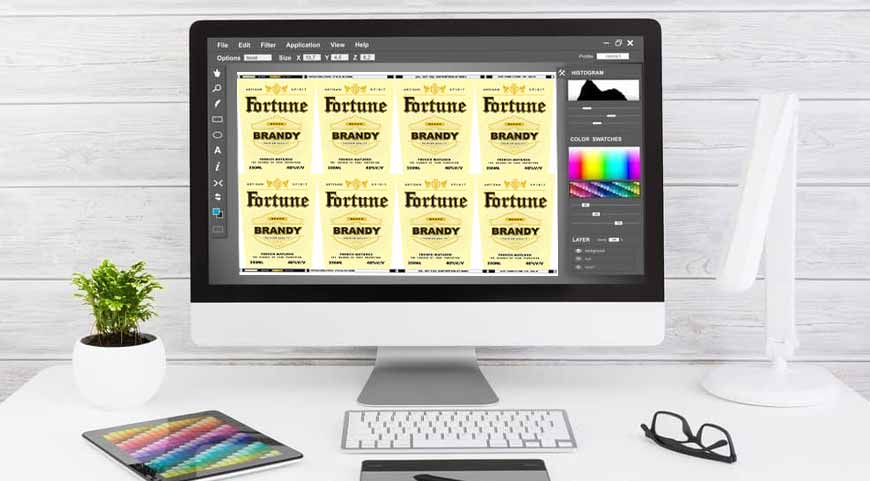
Once the artwork is shared, the Label or Package designers must open the client’s design in professional software such as Adobe Illustrator or Photoshop. At this stage, the goal is to analyse the artwork thoroughly. This analysis includes checking the total number of colours used, such as SPOT Colours, Pantone Colours, and CMYK (Process) Colours.


SPOT COLOUR

Spot colours are solid, premixed inks created using a specific formula—often from the Pantone Matching System (PMS). In other words, a spot colour is printed as a single, consistent ink, making it ideal for accuracy and uniformity.

PANTONE COLOURS

Pantone colours are standardised, and each one is assigned a unique name or number. As a result, designers and printers across different locations can easily match and reproduce the exact same colour without variation.

PROCESS COLOUR (CMYK)

Process colour involves mixing inks through tiny overlapping dots to create a wide spectrum of colours. These colours include Cyan, Magenta, Yellow, and Black. Because of this method, process colours are perfect for full-colour images like photos.

Cost and Consistency Consideration

When it comes to printing, using fewer colours can reduce plate-making costs. However, on the downside, relying solely on process colours may lead to slight shade inconsistencies when printing large volumes or reprinting the same artwork later.

Step 3: Identifying the Printing Materials

At this stage, it is important to identify the specific label or packaging material on which the artwork will be printed. In most cases, the client will recommend the material they prefer depending on their product. However, as a flexo printing company, you can also advise the client on which material best suits their packaging needs.

Types of Materials

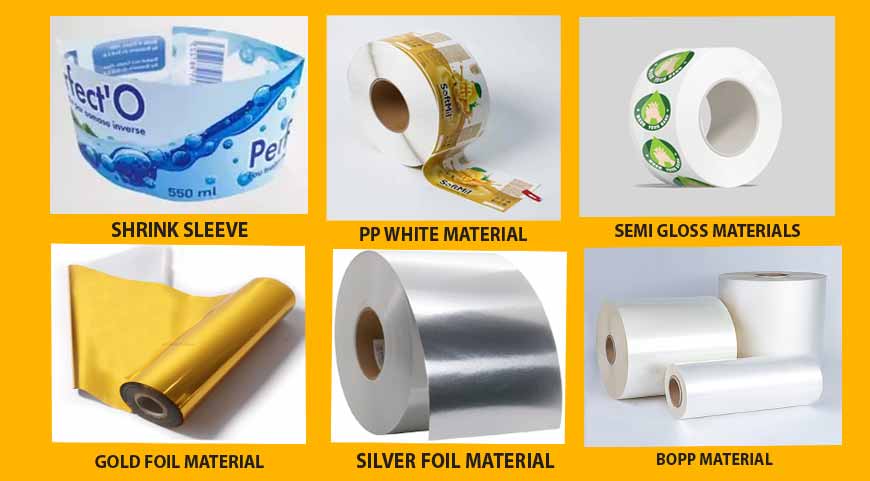
1. Semi-Gloss Material

Semi-gloss materials are self-adhesive but non-waterproof. They are mainly used for products such as honey labels, cosmetic labels, wine and alcohol labels, display labels, pharmaceutical labels, and household product labels for plastic or glass packaging. Generally, these materials are ideal for products that do not go into the refrigerator.


2. PP White Materials

PP White is a non-waterproof, self-adhesive material commonly used for products that require refrigeration. For example, yoghurt labels and bevelled labels for juices and soft drinks fall under this category.


3. BOPP Material

With BOPP materials, the gluing is applied at the edge as the label wraps around the bottle. In addition, they are waterproof, making them suitable for water labels, juice labels, and soft drink labels.
Notably, popular brands such as Dasani Water and Coca-Cola 2L use BOPP labels.
The major advantage of BOPP materials is that they produce high-quality, sharp, and legible labels that easily attract the target audience.


4. Silver Foil / Gold Foil

Silver and gold foils are coating materials applied on semi-gloss, PP clear, or BOPP materials to enhance the label’s visual appeal. Because of their shiny finish, these coatings make labels stand out on supermarket shelves. Products such as cosmetic items, vodka, brandy, and other wine and alcohol labels commonly use these foils.


5. PP Clear Materials

PP Clear is a transparent material designed to expose or showcase the product inside a bottle or jar. Therefore, if your goal is to let customers see the product, this is the ideal choice. It is also waterproof, making it suitable for water-label stickers, alcohol labels, wine spray labels, and many other types of labels.
Step 4: Getting a specific measurement for a particular artwork

At the point u have an idea of the No of colours on the Label and the material to be used, the next thing to check is the label size. The reason you need to know the Label size is to determine whether you have the die for that size.

A die cut refers to a label that has been precisely cut to a specific shape, often custom-fitted to a design, using a metal cutting tool (a “die”). This process cuts through the Label’s face stock and adhesive but not the backing liner, creating unique, eye-catching labels for products that stand out from standard square or rectangular shapes.

We have a special-shaped die and a standard rectangular die shape, in case the company needs either.
Printing may not have a particular die; they can give a die size slightly above ur measurement or somewhat less by a few mm.
Moreover, if the company lacks the die completely, they will go to the extent of importing it at an extra charge to ensure they have it.

POINT TO NOTE!!

On your journey to learn Everything You need to know about Flexo Printing in Nairobi Kenya, flexo printing is a special type of printing that involve several steps to ensure final execution of the printing, for example if a Flexo designers In Nairobi Kenya, didn’t do the trapping well while preparing Distortion and Plate making process, just know the results will also have an error interns of the quality of the print out . In this article, we also review some of the best flexo printing companies in Nairobi Kenya, to guide our clients who want to source flexo printing services.

Step 5: Distortion and Artwork preparation for plate making 

The process of preparing any Label or packaging design is called Trapping.


What’s Trapping!

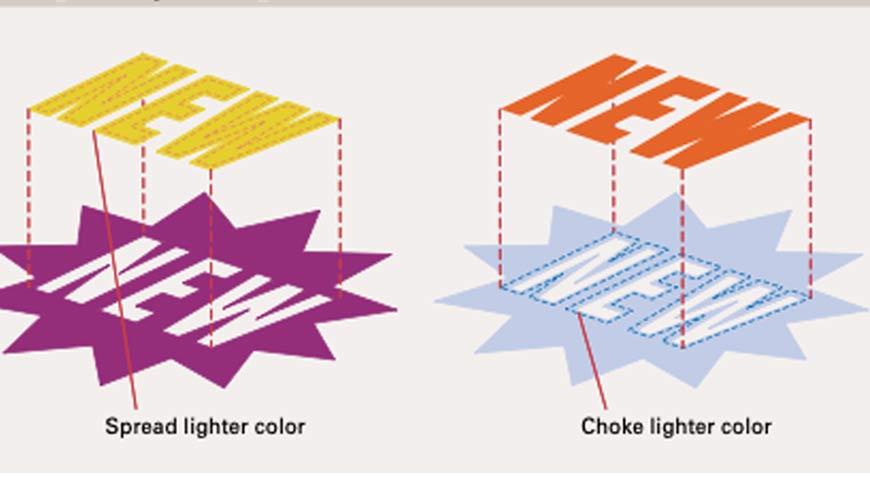
Trapping in flexo printing is a method used to prevent visible gaps or misalignment between colours. It works by allowing one colour to overlap the edge of a neighbouring colour slightly. Typically, the lighter colour is spread into the darker one, or the darker colour is reduced to extend into the lighter area. This overlap, known as thetrap width,helps mask minor registration errors during printing and ensures the final print appears neat and seamless.


During distortion, the flexo designer will fit the required artwork into a die and start adjusting the colour to ensure the final print is successful.


Overprints and Traps


Printing inks on top of each other is called overprinting. In flexography, one ink can

be printed on another only after the first has been completely dried or cured. For this reason, flexographic presses use dry Trapping, which requires the printer to allow for drying. For substrates like clay-coated liner or non-absorbent packaging such as polymer film, drying time can be a problem. Overprinting a second colour when the first is not dry creates an unattractive blotchy effect (often called nailheads), especially on large solids. Excessive Trapping can cause such problems and can slow down the printing process.
Step 6 Color separation
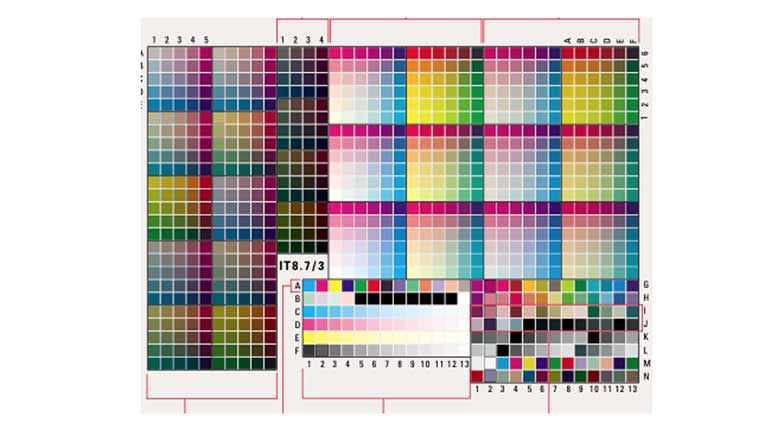
Colour separation in flexo printing simply means analysing colours to make it easier for the operator to do the final printing.
For a label design with spot colour or Pantone colour and CMYK process colours, ensure the image is printed in CMYK. The Brand logo, which always dominates the label design, can be printed in a spot colour or Pantone colour if the client has a specific Pantone No for a given Logo design

Step 6: Overprint

Overprint & Spot Color Printing Guidelines

Overprinting refers to the technique of allowing one color to overlap another. When placing an image over spot colors, always set the stroke thickness between 0.01 mm and 0.05 mm to reduce the chances of misregistration.

When one spot color is printed on top of another, make sure to apply overprint to the stroke. This helps avoid visible white gaps that may appear during printing.

However, if spot colors are being printed on a bright background, do not apply overprint, as it may affect color clarity and result consistency.

When printing labels on shrink sleeve or PP clear material, always include a solid white background layer. Just like painting a house, you begin with a white undercoat before applying the final color. This base layer ensures the printed colors turn out more vibrant, sharp, and accurate.

For PP silver materials, also start with a solid white base. If you want specific areas to reveal the metallic silver effect, remove the white base from those sections to let the silver show through after printing.

Conversely, if you want the PP silver to maintain its shine, avoid adding any white base in those areas. Instead, print the other colors directly onto the silver surface to achieve a metallic appearance.

Flexo Printing and Color Management

In packaging and label printing, the quality of the final output highly depends on the accuracy and selection of colors. Flexo machines can print using 6, 9, or even up to 12 colors. During the artwork preparation stage, the designer selects the appropriate color combinations to ensure optimal results during printing.

White Backup Plate

The white plate is critical because it acts as the base for all colors. Without it, the printed colors may appear dull, flat, or translucent. Applying a solid white backup enhances color vibrancy and opacity.


Reverse-Side Printing

In this technique, the design is mirrored (laterally reversed), and printing starts from the darkest color moving to the lightest. The final product is then viewed from the non-inked (reverse) side of the substrate, resulting in a clean and protected appearance.

Printing and Proofing Process

Once the plates are ready and the material is selected, the operator initiates the printing based on the designer’s specified color setup.

First Printout (Proof)

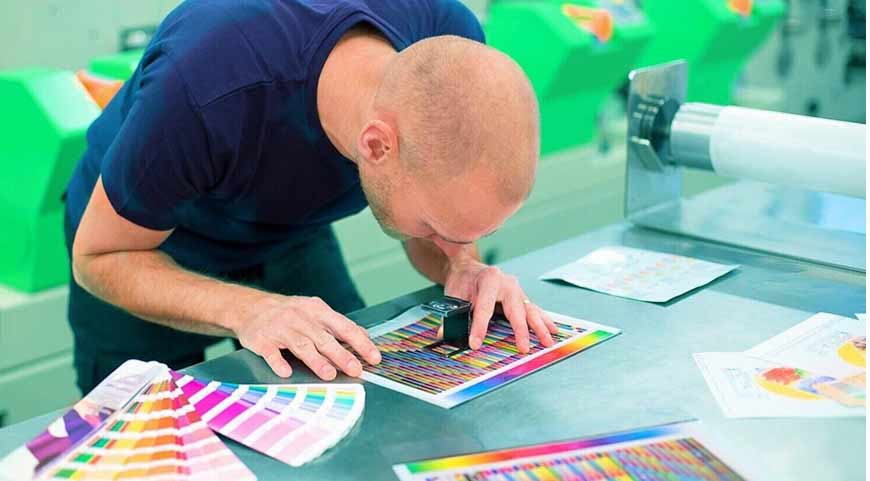
  • The designer reviews the initial print to confirm the color accuracy—especially for image illustrations used in the label.

  • Registration is checked to ensure there are no misalignments between colors. If misregistration occurs, white gaps may appear, negatively affecting the final quality.

Color Density & Adjustment

  • The designer evaluates the color density—whether it appears too dark or too light.

  • If necessary, adjustments are suggested, such as modifying the anilox roller settings to enhance print sharpness and visual appeal.

Final Approval

Once the designer is fully satisfied with the color accuracy, registration, and overall output quality, they approve the proof. The operator can then proceed with the full production run.

Top 10 Company Where You can source Flexo Printing Services In Nairobi Kenya

SKANEM AFRICA

 SKYLABEL    

PLATINUM PACKAGING

Label Converter

Line Art Solutions

Color Label 

Neopack 

Shrink Pack

Elgon Printers 

Where Label Gurus Comes When its come to Flexo Printing !

Label Gurus design is a design agency specialising in Label and packaging design our range of services include :

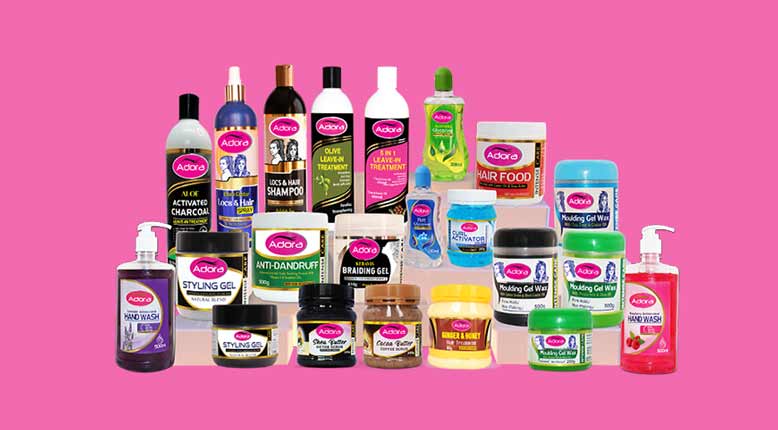
Water Label designs ,Wine Label designs ,Stand up pouches designs ,Serviettes Packaging designs,Tissue Packaging designs ,soap packaging designs ,Rice packaging designs ,sugar packaging designs ,coffee Label designs,Lubricant Label designs ,Peanut butter Label designs ,Tea Label designs ,cosmetic label designs ,Milk packaging designs ,bakery packaging designs ,maize floor packaging designs ,detergent label designs ,car care label designs ,crisp packaging designs ,Noodle packaging designs ,Fresh product label designs ,cooking oil label designs,Kebs stickers /UCR Label design,Plain Labels ,Alcohol labels , Cereals Packaging designs ,honey labels designs ,food Labels ,spice labels designsHair product label design,Moulding Gel wax label ,Glycerine Label ,Massage Oil Label design ,Locs and Hair Shampoo Labels ,Ginger Honey Labels ,Curl Activator Labels ,shea butter labels ,cocoa shea butter labels ,Braiding gel labels ,body lotion labels ,styling gel labels ,hair food labels , Antidandruff labels ,Leave In Treatment labels ,Hand Sanitizer labels ,Milk pouch Labels ,Yoghurt Vanilla Package design ,Milk Package design,Yoghurt Label Design , Branded Water Labels ,Branded water sticker ,indian water labels ,Congolese water labels ,Custom Water Labels ,Water branding services ,Customized water for organization,Corporate Water ,Soccer Event water labels ,Baby shower water labels ,Clear water label ,Club water label,Glass water label ,Funeral water label ,Birthday water label ,Tour and hike water label ,executive water label ,water label for liquor store ,Restaurant water label,water label for clubs ,wedding water label ,Graduation water label ,wedding water stickers ,Sacco water label ,real estate water label ,Political campaign water label,Cosset water label ,Rock water label ,Vitafresh water label,Lake view water label ,Aqua Nova water label ,Neineken water label,Oasis water label ,Reg Joe water label ,Tour and Travelling Water label ,modern water label design , Tanzania water label ,Bar soap packaging design , Cooking oil label design ,Cereal Packaging design ,stand pouch design 

wine label design   Tissue Packaging design 

Printing and Proofing

When the operator has the plates ready and the choice of material ,the next step is to run out the printing process, depending on the choices of color provided by the designer
The first printed printout, the designer has to approve the design and color to ensure the color has been achieved successfully, especially the image illustration used on the label.
The second thing the designer always looks for is the Registration. If we have color misregistration, it means we have white gaps that don’t look good in the final appearance.
The designer has to check the shade of the final printout, whether it’s dark or light , and where the anilox needs to be adjusted to enhance the appeal of the final printout. out he can always suggest.
When the designer is fully satisfied with the printout, he can go ahead and approve the printing so the operator can proceed with the printing .

Conclusion

For any entrepreneur venturing into the label and product industry, Flexo Labels and Packaging is your gateway to standing out and outperforming competitors. To begin with, it’s important to research and compare a few of the Best Flexo Printing companies in Nairobi, Kenya, especially in terms of their printing rates.

Next, you should have a direct conversation with Flexo designers in Nairobi, Kenya, as they will guide you through essential adjustments to your label while preparing the artwork for distortion and plate making.

However, before diving into label and packaging design, make sure you fully understand everything you need to know about Flexo printing in Nairobi, Kenya. Venturing into this industry without the right knowledge may lead to costly mistakes and production challenges.

Frequently Asked Questions (FAQs)

1. What is flexo printing in Nairobi Kenya?
Flexo printing in Nairobi Kenya is a label and packaging printing method that uses flexible plates, fast-drying ink, and rotating cylinders to transfer designs onto materials such as plastic, foil, paper, BOPP, PP White, PP Clear, and semi-gloss substrates.
2. Why is flexo printing important for labels and packaging?
Flexo printing is important because it allows entrepreneurs and manufacturers to produce high-volume labels and packaging with strong color quality, speed, durability, and professional finishing.
3. How does flexo printing work?
Flexo printing works by wrapping flexible printing plates around rotating cylinders, applying ink to the plates, and transferring the artwork onto the selected packaging material.
4. What are flexo labels and packaging?
Flexo labels and packaging are printed product labels, stickers, sleeves, pouches, and packaging materials produced through the flexographic printing process.
5. Why should entrepreneurs learn about flexo printing?
Entrepreneurs should learn about flexo printing because understanding colors, materials, plate making, proofing, and printing costs helps avoid production mistakes and improves packaging results.
6. What role do flexo designers in Nairobi Kenya play?
Flexo designers prepare artwork for distortion, trapping, color separation, plate making, and final print execution so that the label prints correctly during production.
7. Why is artwork preparation important in flexo printing?
Artwork preparation is important because poor setup can cause misregistration, wrong colors, gaps, poor trapping, and low-quality final printouts.
8. What is the first step in flexo printing?
The first step is engaging the printer and sharing the artwork for review. The printer or flexo designer checks whether the design is suitable for distortion and plate making.
9. Why does the printer review artwork before printing?
The printer reviews artwork to confirm colors, material, label size, die availability, trapping requirements, and whether the file is ready for plate making.
10. What is distortion in flexo printing?
Distortion is the adjustment of artwork to compensate for plate stretching and cylinder movement during printing, ensuring the final printed label appears correctly.
11. What is plate making in flexo printing?
Plate making is the process of creating flexible printing plates for each color or printing section. These plates transfer ink onto the packaging material.
12. Why is plate making important?
Plate making is important because each plate determines how accurately colors, text, graphics, and images appear on the final printed label.
13. What happens if plate making is poorly done?
Poor plate making can lead to blurred prints, misaligned colors, white gaps, poor text clarity, and overall low-quality packaging.
14. What is trapping in flexo printing?
Trapping is a method used to prevent visible gaps between colors by allowing one color to slightly overlap another during printing.
15. Why is trapping important in flexo printing?
Trapping is important because it hides minor registration errors and ensures the final print looks clean, seamless, and professional.
16. What happens when trapping is not done properly?
If trapping is not done properly, the final print may show white gaps, misaligned colors, and visible production errors.
17. What is dry trapping in flexography?
Dry trapping means one ink is printed over another only after the first ink has dried or cured, helping reduce blotchy effects and ink problems.
18. What is overprinting in flexo printing?
Overprinting is the technique of printing one color or ink directly over another color to avoid white gaps and improve registration.
19. When should overprint be applied?
Overprint should be applied carefully, especially when one spot color sits on top of another, to reduce visible gaps during printing.
20. When should overprint be avoided?
Overprint should be avoided when printing spot colors on bright backgrounds because it may affect color clarity and consistency.
21. What is color separation in flexo printing?
Color separation is the process of analyzing and separating artwork colors into individual print components such as CMYK, spot colors, Pantone colors, and white backup plates.
22. Why is color separation important?
Color separation helps the printer know how each color will be printed and which plates are required for accurate final output.
23. What are spot colors in flexo printing?
Spot colors are solid premixed inks, often based on the Pantone Matching System, used for accurate and consistent brand color reproduction.
24. What are Pantone colors?
Pantone colors are standardized colors identified by specific names or numbers, allowing designers and printers to match colors consistently across different print runs.
25. What is process color in flexo printing?
Process color uses CMYK inks—Cyan, Magenta, Yellow, and Black—to create full-color images through tiny overlapping dots.
26. When should CMYK be used in flexo printing?
CMYK is best used for full-color images, photo illustrations, gradients, and artwork that requires many color tones.
27. When should Pantone or spot colors be used?
Pantone or spot colors should be used when a brand needs exact color consistency, especially for logos and dominant brand colors.
28. Can fewer colors reduce flexo printing cost?
Yes. Using fewer colors can reduce plate-making costs because every color may require its own plate.
29. Can process colors cause shade inconsistencies?
Yes. Process colors may sometimes produce slight shade differences during large print runs or repeat production compared to spot colors.
30. How many colors can flexo machines print?
Flexo machines can print using several color stations, including 6, 9, or even up to 12 colors depending on the machine capability.
31. What is a white backup plate?
A white backup plate is a solid white base layer printed behind colors to improve opacity, brightness, and vibrancy, especially on clear, silver, or transparent materials.
32. Why is a white base important on PP Clear material?
A white base is important on PP Clear because it prevents colors from appearing dull or transparent and makes the final artwork look sharper and more vibrant.
33. Why is a white base used on shrink sleeves?
A white base is used on shrink sleeves to support stronger color output and ensure printed graphics remain visible after application.
34. How is white base used on PP Silver material?
On PP Silver material, a white base is added where normal colors should appear solid, while areas without white base allow the metallic silver effect to show through.
35. What is reverse-side printing?
Reverse-side printing is a method where artwork is mirrored and printed on the reverse side of a transparent material, creating a protected and clean final appearance.
36. Why is reverse-side printing useful?
Reverse-side printing protects ink from scratches and gives labels a clean, premium look when viewed from the non-inked side of the substrate.
37. What is registration in flexo printing?
Registration is the alignment of different printed colors. Good registration ensures each color lands in the correct position on the label.
38. What happens when there is misregistration?
Misregistration causes colors to shift out of position, often creating white gaps, blurry edges, and poor final label appearance.
39. Why does a designer check registration during proofing?
A designer checks registration to confirm that colors are aligned correctly and that the printed label matches the approved artwork.
40. What is color density in flexo printing?
Color density refers to how light or dark the printed color appears. The designer checks density to ensure the print matches the desired final look.
41. What is an anilox roller?
An anilox roller controls the amount of ink transferred to the printing plate. Adjusting it can improve color strength, sharpness, and final print quality.
42. Why might an anilox roller need adjustment?
An anilox roller may need adjustment if the print appears too dark, too light, weak, or lacking sharpness during proofing.
43. What is the proofing process in flexo printing?
Proofing is the first test print reviewed by the designer to confirm color accuracy, registration, sharpness, material behavior, and final appearance before full production.
44. Why is the first printout important?
The first printout is important because it allows the designer and printer to detect color issues, registration problems, and production adjustments before mass printing starts.
45. Who approves the flexo print proof?
The designer or client representative usually approves the proof after checking color accuracy, registration, shade, material behavior, and overall quality.
46. What happens after print proof approval?
After proof approval, the operator proceeds with the full production run based on the approved color setup, plates, and material.
47. Why should proofing not be skipped?
Proofing should not be skipped because it prevents costly mistakes that may affect thousands of labels during full production.
48. What materials are used in flexo printing?
Flexo printing materials include semi-gloss, PP White, BOPP, PP Clear, paper, foil, plastic, self-adhesive materials, silver foil, and gold foil finishes.
49. What is semi-gloss material used for?
Semi-gloss material is self-adhesive and commonly used for honey labels, cosmetic labels, wine labels, pharmaceutical labels, and household product labels.
50. Is semi-gloss waterproof?
Semi-gloss is generally non-waterproof and is best suited for products that are not exposed to refrigeration or heavy moisture.
51. What is PP White material used for?
PP White is commonly used for products that need durable labels, including refrigerated products such as yoghurt labels, juice labels, and soft drink labels.
52. What is BOPP material used for?
BOPP is a waterproof wrap-around label material commonly used for water labels, juice labels, soft drink labels, and bottle labels.
53. Why is BOPP popular for water labels?
BOPP is popular because it produces sharp, legible, waterproof labels that look professional and attract customers on shelves.
54. Which brands use BOPP labels?
Popular beverage brands such as Dasani Water and Coca-Cola 2L commonly use BOPP-style wrap-around labels.
55. What is PP Clear material?
PP Clear is a transparent waterproof material used to showcase the product inside bottles or jars while still displaying branding information.
56. When should PP Clear labels be used?
PP Clear labels should be used when a brand wants the product, bottle, or jar contents to remain visible while still carrying professional branding.
57. What are silver and gold foils used for?
Silver and gold foils are used to enhance the visual appeal of labels, especially for cosmetics, vodka, brandy, wine, and premium alcohol products.
58. Can foil labels improve shelf appeal?
Yes. Foil labels create a shiny premium finish that catches light and helps products stand out on supermarket shelves.
59. Why is material identification important before printing?
Material identification is important because each material behaves differently with ink, color, white base, durability, and final finishing.
60. Can the printer advise on material selection?
Yes. A flexo printing company can advise clients on suitable materials depending on the product type, storage conditions, and branding goals.
61. Why is label measurement important in flexo printing?
Label measurement is important because it determines whether the printer has the correct die size and whether the design will fit properly on the product.
62. What is a die cut label?
A die cut label is a label cut into a specific shape using a metal cutting tool, allowing custom shapes beyond normal rectangles or squares.
63. Why does die availability matter?
Die availability matters because if the printer does not have the exact die size, they may need to use a close size or import a new die at extra cost.
64. What is a standard rectangular die?
A standard rectangular die is a common label cutting shape used for ordinary rectangular product labels.
65. What is a special-shaped die?
A special-shaped die is a custom cutting tool used to create unique label shapes that make products more eye-catching.
66. Can a printer import a missing die?
Yes. If a printing company lacks a required die completely, they may import it at an extra charge to match the client’s label size or shape.
67. Why should label size be confirmed early?
Label size should be confirmed early to avoid artwork resizing issues, die mismatch, production delays, and extra printing costs.
68. What software is used for flexo artwork preparation?
Professional software such as Adobe Illustrator and Photoshop is commonly used to check colors, prepare artwork, separate files, and create print-ready layouts.
69. Why is Adobe Illustrator important in flexo design?
Adobe Illustrator is important because it allows designers to work with vector artwork, spot colors, Pantone colors, overprints, trapping, and print-ready files.
70. Why is Photoshop used in label artwork?
Photoshop is used for image editing, photo correction, image color preparation, and artwork elements that require pixel-based adjustments.
71. What are the best flexo printing companies in Nairobi Kenya?
Some flexo printing companies mentioned include Skanem Africa, Skylabel, Platinum Packaging, Label Converter, Line Art Solutions, Color Label, Neopack, Shrink Pack, and Elgon Printers.
72. Why should clients compare flexo printing companies?
Clients should compare printing companies based on printing rates, quality, material options, turnaround time, color accuracy, and production capacity.
73. What does Label Gurus Design do in flexo printing?
Label Gurus Design specializes in label and packaging design, artwork preparation, print advisory, and helping clients understand how their designs should be prepared for flexo printing.
74. Does Label Gurus Design offer label and packaging design?
Yes. Label Gurus Design offers a wide range of label and packaging design services for water, wine, pouches, tissue, soap, rice, sugar, coffee, cosmetics, food, honey, spices, and more.
75. Does Label Gurus Design design water labels?
Yes. Label Gurus Design creates water label designs, branded water stickers, corporate water labels, event water labels, restaurant water labels, and wedding water labels.
76. Does Label Gurus Design design wine and alcohol labels?
Yes. Label Gurus Design creates wine labels, alcohol labels, liquor store water labels, vodka labels, brandy labels, and premium beverage label designs.
77. Does Label Gurus Design design stand up pouches?
Yes. Label Gurus Design creates stand up pouch designs for food, cereals, snacks, spices, coffee, tea, and other product categories.
78. Does Label Gurus Design design tissue packaging?
Yes. Tissue packaging, serviettes packaging, and hygiene product packaging designs are among the services offered.
79. Does Label Gurus Design design cosmetics labels?
Yes. Cosmetic label services include body lotion labels, styling gel labels, hair food labels, shampoo labels, shea butter labels, curl activator labels, and related products.
80. Does Label Gurus Design design food labels?
Yes. Food label services include honey labels, spice labels, cereal packaging, rice packaging, sugar packaging, peanut butter labels, noodle packaging, and cooking oil labels.
81. What is shrink sleeve label printing?
Shrink sleeve printing is a packaging method where printed film wraps around the product and shrinks to fit the container shape, often requiring special artwork setup and white backup.
82. Why do shrink sleeves need white backup?
Shrink sleeves need a white backup to make colors appear vibrant, sharp, and visible on transparent or flexible film materials.
83. Can flexo printing be used for plain labels?
Yes. Flexo printing can produce plain labels, branded labels, product stickers, and packaging labels depending on client needs.
84. Can flexo printing be used for KEBS stickers or UCR labels?
Yes. KEBS stickers, UCR labels, and product compliance labels can be prepared and printed depending on design and production requirements.
85. Can flexo printing handle high-volume production?
Yes. Flexo printing is suitable for mass production because it is fast, efficient, and designed for large quantities of labels and packaging.
86. Is flexo printing good for small quantities?
Flexo printing is usually better for larger quantities because plate-making costs can make small runs less economical.
87. Why are plate costs important in flexo printing?
Plate costs are important because each color and plate adds to the total production cost, especially when printing complex artwork with many colors.
88. How can a brand reduce flexo printing costs?
A brand can reduce costs by simplifying the artwork, reducing color count, using available die sizes, and choosing suitable materials early.
89. Why should designers check the number of colors?
Designers check the number of colors to estimate plate requirements, printing cost, color consistency, and technical feasibility.
90. Can full-color images be printed in flexo?
Yes. Full-color images can be printed using CMYK process colors, especially when artwork includes photos or illustrations.
91. Can flexo printing produce sharp text?
Yes. Flexo printing can produce sharp text when the artwork, plate quality, material, ink, and registration are properly managed.
92. Why does print sharpness matter?
Print sharpness matters because customers must easily read product details, ingredients, barcodes, and brand information on the label.
93. Can barcodes be printed through flexo?
Yes. Barcodes can be printed through flexo, but they must be prepared correctly, sized properly, and tested for scanning accuracy.
94. Why should barcodes be checked before printing?
Barcodes should be checked before printing because unreadable barcodes can cause retail scanning issues and costly label reprints.
95. Can flexo printing support premium packaging?
Yes. Flexo printing can support premium packaging using foil finishes, clear materials, metallic effects, spot colors, and high-quality artwork preparation.
96. Can flexo printing help products stand out?
Yes. Well-executed flexo printing helps labels appear sharp, vibrant, durable, and attractive, making products stand out from competitors.
97. What mistakes should clients avoid in flexo printing?
Clients should avoid unclear artwork, too many colors, wrong material choice, missing die information, poor barcode setup, and skipping proof approval.
98. Why should clients consult flexo designers before production?
Clients should consult flexo designers because they understand plate making, distortion, trapping, materials, color setup, and production adjustments needed for quality results.
99. Is flexo printing worth it for product manufacturers?
Yes. Flexo printing is worth it for manufacturers who need durable, professional, and high-volume labels or packaging for market-ready products.
100. How do I start flexo printing in Nairobi Kenya?
Start by preparing professional label artwork, confirming material and size, checking color setup, consulting a flexo designer, comparing printing companies, and approving a proof before full production.

error: Content is protected !!
Open chat
Hello Label Gurus, I got your number from your website and I wish to get some services from you.